Wednesday, August 31, 2022

King Willem II, King of the Netherlands, Grand Duke of Luxembourg, and Duke of Limburg


William II (Dutch: Willem Frederik George Lodewijk, anglicized as William Frederick George Louis; 6 December 1792 – 17 March 1849) was King of the Netherlands, Grand Duke of Luxembourg, and Duke of Limburg.

William II was the son of William I and Wilhelmine of Prussia. When his father, who up to that time ruled as sovereign prince, proclaimed himself king in 1815, he became Prince of Orange as heir apparent of the Kingdom of the Netherlands. With the abdication of his father on 7 October 1840, William II became king. During his reign, the Netherlands became a parliamentary democracy with the new constitution of 1848.

William II was married to Anna Pavlovna of Russia. They had four sons and one daughter. William II died on 17 March 1849 and was succeeded by his son William III. 

He entered the British Army, and in 1811, as a 19-year-old aide-de-camp in the headquarters of Arthur Wellesley, 1st Duke of Wellington, was allowed to observe several of Wellington's campaigns of the Peninsular War. Though not yet 20, the young prince, according to the customs of the time, was made lieutenant colonel on 11 June 1811[10] and colonel on 21 October that year.[11] On 8 September 1812 he was made an aide-de-camp to the Prince Regent[12] and on 14 December 1813 promoted to major-general.[13] His courage and good nature made him very popular with the British, who nicknamed him "Slender Billy". He returned to the Netherlands in 1813 when his father became sovereign prince, and in May 1814 succeeded Sir Thomas Graham as the highest-ranking officer of the British forces stationed there.[14]

On 8 July 1814, he was promoted to lieutenant-general in the British Army,[15] and on 25 July to general.[16] As such, he was senior officer of the Allied army in the Low Countries when Napoleon I of France escaped from Elba in 1815. He relinquished command on the arrival of the Duke of Wellington, and, though this was his first real battle, served as commander of the I Allied Corps, first at the Battle of Quatre Bras (16 June 1815) and then at the Battle of Waterloo (18 June 1815), where he was wounded[17] in his left shoulder by a musket ball.[18] He was aged 22. As a sign of gratitude for what the Dutch throne styled "his" victory at Waterloo, William was offered Soestdijk Palace by the Dutch people.[19][20]

Military historian William Siborne blamed many casualties suffered by Coalition forces during the Waterloo Campaign to William's inexperience.[21] In response, Siborne was accused by Lieutenant-General Willem Jan Knoop of misrepresenting William's actions at Waterloo.[22] An inspection into the archives of Siborne by Dutch officer Francois de Bas in 1897 claimed to discover the "selective use of sources" and "numerous miscounts and untruths".

On 7 October 1840, on his father's abdication, he acceded to the throne as William II. Although he shared his father's conservative inclinations, he did not intervene in governmental affairs nearly as much as his father had. There was increased agitation for broad constitutional reform and a wider electoral franchise. Although William was certainly no democrat, he acted with sense and moderation.

The Revolutions of 1848 broke out all over Europe. In Paris the Bourbon-Orléans monarchy that had stolen "his" southern provinces fell. Warned that the revolution might spread to the Netherlands next, William decided to institute a more liberal regime, believing it was better to grant reforms instead of having them imposed on him on less favourable terms later. As he later put it, "I changed from conservative to liberal in one night". He chose a committee headed by the prominent liberal Johan Rudolf Thorbecke to create a new constitution.

The new document provided that the Eerste Kamer (Senate), previously appointed by the King, would be elected indirectly by the Provincial States. The Tweede Kamer (House of Representatives), previously elected by the Provincial States, would be elected directly via census suffrage in electoral districts, with the franchise limited to those who paid a certain amount in taxes. Ministers were now fully responsible to the Tweede Kamer. For all intents and purposes, the real power passed to the Tweede Kamer, and the king was now a servant of government rather than its master. That constitution of 1848, amended numerous times (most notably by the replacement of census suffrage by universal manhood suffrage and districts with nationwide party-list proportional representation, both in 1917) is still in effect today.

He swore in his first and only cabinet under the terms of the new constitution a few months before his sudden death in Tilburg, North Brabant (1849). 


King Frederick William II of Prussia


Frederick William II (German: Friedrich Wilhelm II.; 25 September 1744 – 16 November 1797) was King of Prussia from 1786 until his death in 1797. He was in personal union the Prince-elector of Brandenburg and (via the Orange-Nassau inheritance of his grandfather) sovereign prince of the Canton of Neuchâtel. Pleasure-loving and indolent, he is seen as the antithesis to his predecessor, Frederick the Great. (Frederick II). Under his reign, Prussia was weakened internally and externally, and he failed to deal adequately with the challenges to the existing order posed by the French Revolution. His religious policies were directed against the Enlightenment and aimed at restoring a traditional Protestantism. However, he was a patron of the arts and responsible for the construction of some notable buildings, among them the Brandenburg Gate in Berlin. 


Monday, August 29, 2022

King Willem I of Netherlands


William I (Willem Frederik, Prince of Orange-Nassau; 24 August 1772 – 12 December 1843) was a Prince of Orange, the King of the Netherlands and Grand Duke of Luxembourg.

He was the son of the last Stadtholder of the Dutch Republic, who went into exile to London in 1795 because of the Batavian Revolution. As compensation for the loss of all his father's possessions in the Low Countries, an agreement was concluded between France and Prussia in which William was appointed ruler of the newly created Principality of Nassau-Orange-Fulda in 1803; this was however short-lived and in 1806 he was deposed by Napoleon. With the death of his father in 1806, he became Prince of Orange and ruler of the Principality of Orange-Nassau, which he also lost the same year after the dissolution of the Holy Roman Empire and subsequent creation of the Confederation of the Rhine at the behest of Napoleon. In 1813, when Napoleon was defeated at the Battle of Leipzig, the Orange-Nassau territories were returned to William and he was asked as well to become the Sovereign Prince of the United Netherlands. He proclaimed himself King of the Netherlands on 16 March 1815. In that year, William I concluded a treaty with King Frederick William III in which he ceded the Principality of Orange-Nassau to Prussia in exchange for becoming the new Grand Duke of Luxembourg. In 1839, he furthermore became the Duke of Limburg as a result of the Treaty of London. After his abdication in 1840, he styled himself King William Frederick, Count of Nassau. 


Sunday, August 28, 2022

King Philippe of Belgium


Philippe or Filip (Dutch: Filip Leopold Lodewijk Maria [ˈfilɪp ˈleːjoːpɔlt ˈloːdəʋɛik maːˈrijaː]; French: Philippe Léopold Louis Marie [filip leɔpɔld lwi maʁi]; born 15 April 1960) is King of the Belgians. He is the eldest child of King Albert II and Queen Paola. He succeeded his father upon the latter's abdication for health reasons on 21 July 2013. He married Mathilde d'Udekem d'Acoz in 1999, with whom he has four children. Their eldest child, Princess Elisabeth, is first in the line of succession.  


King Albert II of Belgium


Albert II[a] (born 6 June 1934) is a member of the Belgian royal family who reigned as King of the Belgians from 9 August 1993 to 21 July 2013.

Albert II is the son of King Leopold III and the last living child of Queen Astrid, born a princess of Sweden.[b] He is the younger brother of the late Grand Duchess Joséphine-Charlotte of Luxembourg and King Baudouin, whom he succeeded upon Baudouin's death in 1993. He married Donna Paola Ruffo di Calabria (now Queen Paola), with whom he had three children. Albert's eldest son, Philippe, is the current King of the Belgians.

On 3 July 2013, King Albert II attended a midday session of the Belgian cabinet. He then announced that, on 21 July, Belgian National Day, he would abdicate the throne for health reasons. He was succeeded by his son Philippe on 21 July 2013. Albert II was the fourth monarch to abdicate in 2013, following Pope Benedict XVI, Queen Beatrix of the Netherlands, and Emir Hamad bin Khalifa of Qatar.[3] In so doing, he was also the second Belgian monarch to abdicate, following his father Leopold III who abdicated in 1951, albeit under very different circumstances. 


King Leopold III of Belgium


Leopold III[1] (3 November 1901 – 25 September 1983) was King of the Belgians from 23 February 1934 until his abdication on 16 July 1951. On the outbreak of World War II, Leopold tried to maintain Belgian neutrality, but after the German invasion in May 1940, he surrendered his country, earning him much hostility, both at home and abroad.

Leopold's act was declared unconstitutional by Prime Minister Hubert Pierlot and his cabinet, who moved to London to form a government-in-exile, while Leopold and his family were placed under house arrest. In 1944, they were moved to Germany and then Austria, before being liberated by the Americans, but banned for some years from returning to Belgium, where his brother Prince Charles, Count of Flanders, had been declared regent. Leopold's eventual return to his homeland in 1950 nearly caused a civil war, and under pressure from the government, he abdicated in favour of his son Baudouin in July 1951.

Leopold's first wife, Astrid of Sweden, was killed in a road accident while on a driving holiday in Switzerland in August 1935, being much mourned by the public. His morganatic second marriage, to Lilian Baels in captivity in 1941, was contrary to Belgian law which stipulates that the civil marriage has to occur before a religious marriage, and she was never permitted the title of queen. 


Thursday, August 11, 2022

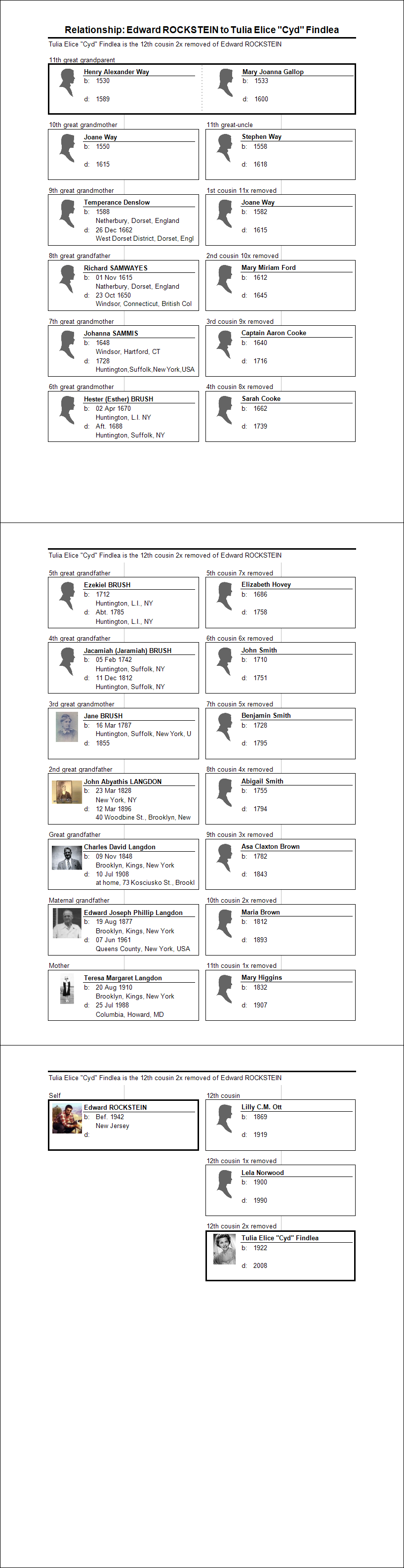
Cyd Charisse--Studied Dancing After Polio


Cyd Charisse (born Tula Ellice Finklea; March 8, 1922[1] – June 17, 2008[2]) was an American actress and dancer.

After recovering from polio as a child and studying ballet, Charisse entered films in the 1940s. Her roles usually featured her abilities as a dancer, and she was paired with Fred Astaire and Gene Kelly; her films include Singin' in the Rain (1952), The Band Wagon (1953), Brigadoon with Gene Kelly and Van Johnson (1954) and Silk Stockings (1957). She stopped dancing in films in the late 1950s, but continued acting in film and television, and in 1991 made her Broadway debut.[3] In her later years, she discussed the history of the Hollywood musical in documentaries, and was featured in That's Entertainment! III in 1994. She was awarded the National Medal of the Arts and Humanities in 2006. 


www.flickr.com
Doc Rock's photos More of Doc Rock's photos

Iraq War Costs--Going Up!!!!

Cost of the War in Iraq
(JavaScript Error)